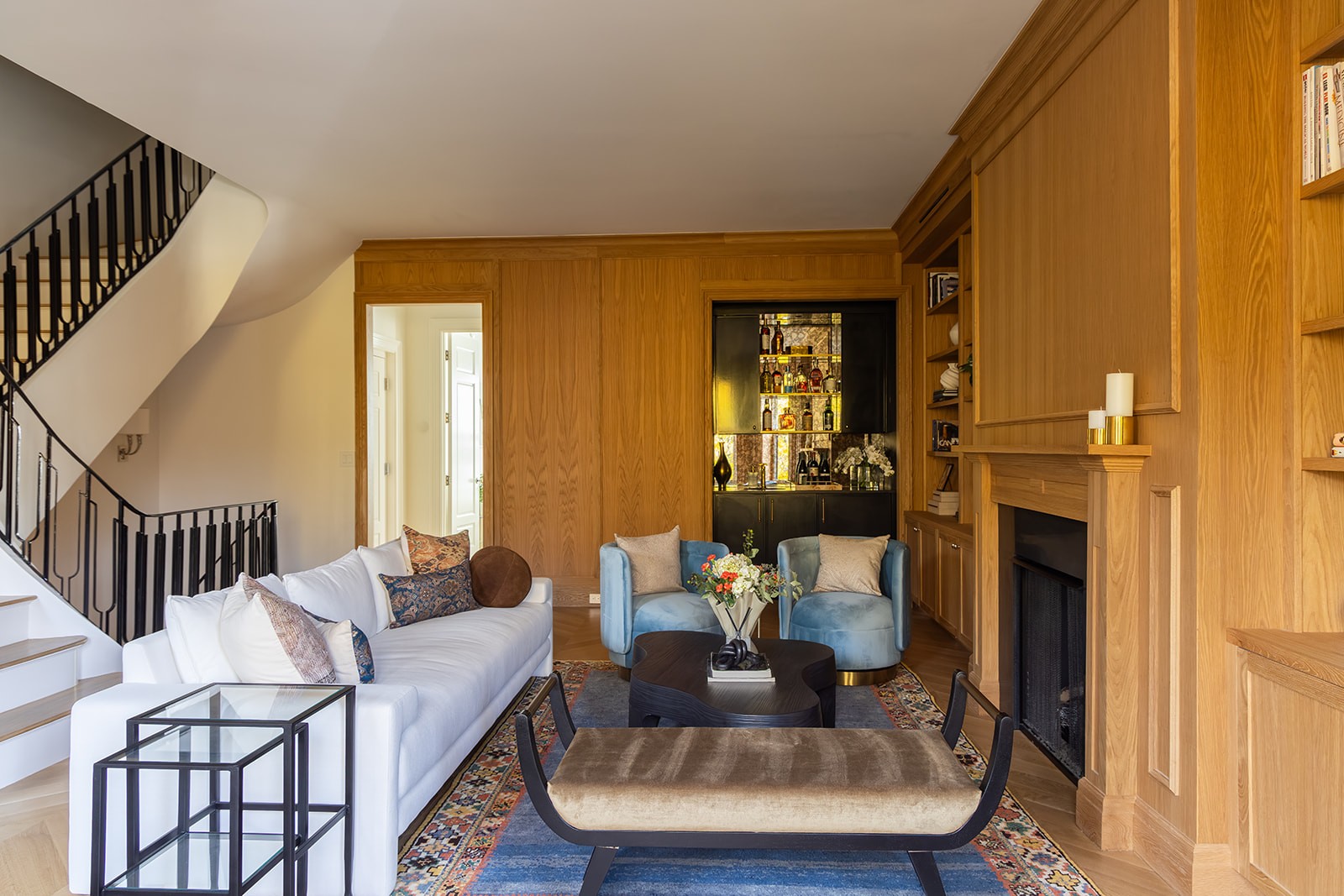
If you're reading this, you're probably in that exciting-but-overwhelming phase of thinking about transforming your home. Maybe you've been saving Pinterest boards for months. Maybe you just closed on a new build and the builder is asking you to pick from 47 tile options by Friday. Or maybe you've been staring at your living room for three years thinking something needs to change, but you're not sure where to start.
Whatever brought you here, you have a very reasonable question: how much does it actually cost to hire an interior designer?
I'm going to give you a straight answer — not a vague "it depends" followed by a sales pitch. I'll walk you through what designers typically charge, what those fees actually cover, and what realistic budgets look like for the three types of residential projects we take on most often: furnishing and decor, renovations, and new build selections.
Why Interior Design Pricing Feels So Confusing
Here's the honest truth: the interior design industry has never been great at talking about money. Every designer prices differently, and most websites are deliberately vague about costs because they don't want to scare anyone away.
But I think that vagueness creates more anxiety than transparency ever could. When you don't know what to expect, you either overspend because you didn't set boundaries upfront, or you never reach out at all because you assume it's out of your budget. Neither outcome is great.
The reason pricing varies so much is that interior design isn't one service — it's a spectrum. A designer helping you pick paint colors for your bedroom is doing fundamentally different work than one managing a full kitchen renovation with contractors, custom cabinetry, and plumbing relocations. The pricing should reflect that, and it does.
How Interior Designers Typically Charge
Before I get into project-specific budgets, it helps to understand the common fee structures you'll encounter. Most residential interior designers use one of these models — or a combination.
Hourly rate. Some designers bill by the hour, usually between $100 and $300 per hour for residential work. This can work for small, focused projects — like a two-hour consultation to help you figure out a furniture layout. But for larger projects, hourly billing gets unpredictable fast. Costs add up when you factor in sourcing time, vendor coordination, site visits, and revisions. And honestly? It can create an uncomfortable dynamic where clients feel like the clock is ticking every time they ask a question.
Percentage of project cost. For large renovations or new builds, some designers charge 10 to 25 percent of the total project budget. This aligns their fee with the scale of the work, but it can be hard to budget for when you're not sure what the total cost will be until you're well into the project.
Product markup or commission. Many designers purchase furnishings at a trade discount and pass along a markup — usually 20 to 35 percent — as part of their compensation. This is sometimes layered on top of other fees, which can make the total cost feel opaque.
Flat fee. This is the model I believe in most — and it's how we work at Plush Design Studio. You get a clear, upfront design fee that covers the full scope of our work. No tracking hours, no surprise charges, no wondering whether asking for one more revision is going to cost you. You know exactly what your design investment looks like before we start, and that lets us both focus on getting the result right.
What Does a Design Fee Actually Cover?
This is where a lot of confusion lives. When someone quotes you a design fee, what are you actually getting?
Not every designer includes the same things, so it's worth asking upfront. Some charge separately for 3D renders, revisions, or site visits — which can add thousands to the final bill.
At Plush Design Studio, our flat fee covers the complete design experience:
Initial consultation and site visit
Understanding your goals and how you live
Developing a full design concept
Space planning and layouts
3D renders so you can see your space before a single piece is ordered
Multiple rounds of revisions until it feels right
Sourcing and selecting furniture, finishes, and materials
Coordinating with vendors and contractors
Managing orders, deliveries, and timelines
Site visits during installation
Final styling so everything comes together beautifully
We include 3D renders and revisions as standard because we've seen what happens when they're treated as extras — clients either skip them to save money and end up disappointed with the result, or they get hit with unexpected costs halfway through. Neither situation leads to the outcome anyone wants: a finished home that looks and feels exactly the way you imagined it.
What the design fee doesn't cover is the cost of the furniture, materials, and finishes themselves. Think of it this way: the design fee pays for the expertise, creativity, and project management. The product budget pays for the actual things that go into your home. A good designer will always keep those two numbers clear and separate so your budget stays on track.
Realistic Budgets by Project Type
Now, the part you came here for. Here's what budgets realistically look like for each type of project, based on our experience and industry benchmarks.
Furnishing and Decor
This is our most popular service for clients who have a home they love but want the interiors to feel cohesive, polished, and personal. Maybe you moved in and bought furniture piecemeal over the years, or maybe you have empty rooms waiting for a vision.
A furnishing project typically includes sourcing furniture, rugs, lighting, artwork, window treatments, and accessories. We create a complete design plan, handle all the ordering and delivery coordination, and style everything on installation day.
What to budget: For a single room like a living room, you might spend $10,000 to $20,000 total, including design fees and furnishings. A multi-room project covering your main living areas might range from $20,000 to $50,000 or more, depending on the quality of furnishings and how many rooms are involved.
The biggest variable here is your taste in furniture. There's a meaningful difference between outfitting a living room with well-made pieces from mid-range retailers versus custom upholstery and designer statement pieces. Both approaches can look beautiful — the budget just shifts accordingly.
Renovation and Remodels
Renovations are a completely different level of complexity. We're not just selecting furniture — we're planning layouts, choosing finishes like flooring and cabinetry, collaborating with contractors, managing construction timelines, and making hundreds of decisions that all need to work together seamlessly.
A kitchen or bathroom renovation is usually the most involved type of residential project, because it touches plumbing, electrical, cabinetry, countertops, tile, lighting, and hardware — all at once.
What to budget: A single-room renovation like a kitchen or primary bathroom typically starts around $30,000 to $50,000 when you factor in both design fees and construction costs. More extensive renovations — say a kitchen plus two bathrooms plus a living area — can run $75,000 to $150,000 or higher, depending on the scale, finishes, and structural changes involved.
Design fees for renovation projects tend to be higher than furnishing-only work because the scope is more intensive. You're paying for space planning, detailed material specifications, contractor coordination, regular site visits, and the problem-solving that inevitably comes up during construction. Things rarely go exactly as planned in a renovation — that's normal — and having a designer who's been through it hundreds of times means issues get resolved quickly instead of becoming expensive mistakes.
One thing I always tell clients: a good designer will actually save you money on a renovation. We've seen firsthand how costly it gets when homeowners try to manage finish selections and contractor coordination alone. Choosing the wrong tile after it's already installed, ordering cabinets with incorrect measurements, or not planning for adequate lighting — these are the kinds of errors that cost thousands to fix. Getting the design right upfront prevents those problems.
New Build Selections
If you're building a new home, your builder will ask you to make an overwhelming number of decisions on a tight timeline — flooring, countertops, cabinetry, lighting fixtures, hardware, paint colors, tile, and more. These selections all need to work together to create a cohesive home, and the builder's design center often has limited options and even more limited guidance.
This is where having a designer makes an enormous difference. We help you navigate the entire selection process so that every choice supports a unified design vision. We attend builder meetings with you, review available options, recommend upgrades that are genuinely worth the money (and steer you away from ones that aren't), and make sure nothing falls through the cracks.
What to budget: Design fees for new build selection support are typically lower than full renovation projects because we're guiding decisions within the builder's process rather than managing construction. Total project budgets, including the builder's finish upgrades, often fall between $15,000 and $50,000 depending on the size of the home and how many upgrades you choose.
The value here is confidence. Builders move fast, and they'll ask you to lock in selections on a short timeline. Having a designer in your corner means you won't second-guess every decision or end up with a kitchen that doesn't match your bathroom because you chose both on separate stressful afternoons at the design center.
What to Look for in a Designer's Pricing
Now that you have a sense of the numbers, here are a few things worth paying attention to when you're comparing designers.
Ask what's included — and what isn't. Some designers quote a low design fee but charge separately for renders, revisions, site visits, or procurement. Make sure you understand the full picture before you commit. The last thing you want is a project that starts on budget and slowly creeps up because every change costs extra.
Understand how revisions are handled. Design is a collaborative process, and your feedback is essential to getting the result right. If a designer charges per revision, you might find yourself hesitating to speak up when something isn't quite what you envisioned. Look for someone who builds revisions into the process so you feel comfortable giving honest feedback.
Look at their finished work. Pricing tells you what you'll pay. A portfolio tells you what you'll get. Before you compare fees, look at the quality and style of the designer's completed projects. A slightly higher fee for a designer whose work consistently looks polished, cohesive, and move-in ready is almost always worth it over a lower fee for work that looks unfinished or generic.
Trust your gut on the consultation. The best designer-client relationships feel like partnerships. During your initial conversation, pay attention to whether the designer listens carefully, explains their process clearly, and makes you feel confident rather than confused. That dynamic matters more than most people realize.
How to Get Started
If you're at the point where you're researching costs, you're closer to getting started than you think. Here are a few steps to make the process easy.
Know your rough budget range. You don't need an exact number, but having a general sense — whether you're thinking $10,000, $50,000, or $100,000-plus — helps your designer tailor recommendations from the very first conversation.
Gather inspiration. Save images of rooms and styles you're drawn to. It doesn't need to be organized — a messy Pinterest board is perfect. What matters is giving your designer a window into your taste and what feels like "home" to you.
Think about how you actually live. The best designs aren't just pretty — they support your daily routine. Do you have kids or pets? Do you work from home? Do you entertain often? These details shape every design decision and make the difference between a space that looks great in photos and one that feels great to live in.
Book a consultation. This is the no-commitment step where you talk through your project, your goals, and your budget with a designer. At Plush Design Studio, we offer a free consultation call — no pressure, just a real conversation about your space and whether we're the right fit.
The goal is simple: you should walk away knowing exactly what to expect in terms of process, timeline, and cost — so you can move forward with confidence.
Thinking about your next project? Book a free consultation with Plush Design Studio — we'll talk through your vision, your budget, and how to bring it all together.